The Transparency Trap
How conflict mineral compliance became the art of naming names

FDA compliance means your food won’t kill you.
OSHA compliance means your workplace won’t kill you.
HIPAA compliance means your medical data stays private.
GDPR compliance means your personal data stays protected.
Conflict minerals compliance means your company named its smelters.
To Adam from Massachusetts, the distinction between enforcement compliance and disclosure compliance does not register. For him, the issue of conflict minerals sits under government scrutiny, just like food safety under the FDA or workplace safety under OSHA.
Every year, more than 10,000 publicly traded companies; from semiconductor giants and consumer electronics firms to automakers, aerospace contractors, uniform manufacturers, and jewelers all file a document with the Securities and Exchange Commission (SEC) that few outside the compliance industry ever read.
The form, known as Form SD, is supposed to tell investors what those companies know about where their tin, tantalum, tungsten, and gold come from and whether any of it might be financing armed groups in the Democratic Republic of the Congo (DRC).
These four minerals: tin, tantalum, tungsten, and gold, abbreviated as 3TG are not peripheral materials. Tantalum is in every capacitor. Tin solders every circuit board. Tungsten sits in every vibration motor. Gold connects every microchip. The entire global technology supply chain runs on them.
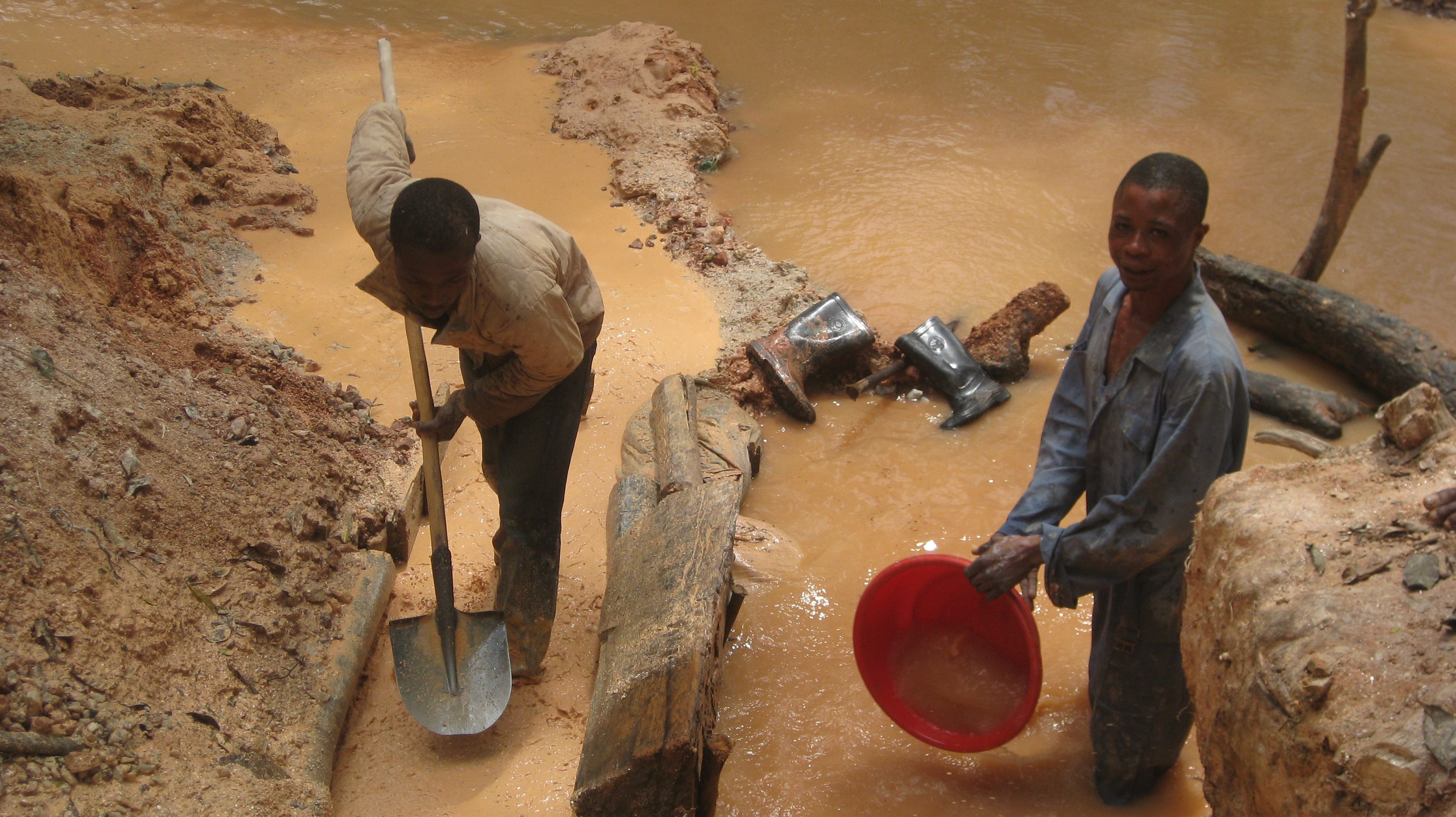
The DRC and its neighbors sit atop some of the world’s richest deposits of these minerals. Armed groups have long financed their operations by taxing, seizing, or controlling the mines that extract them.
The Form SD filings are careful, detailed, and often strikingly similar. They reference the same framework of Organisation for Economic Co-operation and Development (OECD). They identify smelters and refiners. They report audit statistics. And they almost universally stop well short of guaranteeing that their products are conflict-free.
In November 2025, Washington-based International Rights Advocates sued Apple, alleging that its public representations about responsible sourcing do not match on-ground conditions in Congo.
The lawsuit is not evidence that the system has collapsed. It is a stress test, one legal challenge within an already ambiguous regime that reveals, with unusual clarity, where the architecture of disclosure ends and accountability would need to begin.
That ambiguity has now reached the regime itself. The US government's own auditor has concluded the rule may have made things worse. An SEC Commissioner has called it an abject failure. And the United States has signed a minerals deal with the DRC that may make the filing redundant entirely.
To understand the gap, we have to go back to 2010 and ask a question nobody asked at the time: what exactly was Congress asking companies to comply with?
A Promise in the Preamble, Quietly Rolled Back
The SEC’s own fact sheet is unusually candid about why the rule exists. “Congress enacted Section 1502,” it states, “because of concerns that the exploitation and trade of conflict minerals by armed groups is helping to finance conflict in the DRC region and is contributing to an emergency humanitarian crisis.”
Humanitarian crisis, armed groups, conflict financing — that was the stated reason for the law. That is what Congress told the public it was addressing.
However, the instrument Congress chose was a disclosure form.
The SEC operationalized this through Rule 13p-1. Companies must conduct a Reasonable Country of Origin Inquiry (RCOI), determine whether 3TG may have originated in the DRC or adjoining countries, perform due diligence aligned with OECD guidance, and disclose what they found.
But, the rule does not mandate conflict-free sourcing. It does not require at least trying to eliminate upstream harm. And on top of that, the regime formally accommodates not knowing. SEC created a valid compliance category called “DRC Conflict Undeterminable” for companies unable to make a determination.
The framework did have one accountability mechanism with teeth: an independent audit of the Conflict Minerals Report itself, mandatory for any company that voluntarily claimed its products were ‘DRC conflict free.’ But in 2014, a D.C. Circuit court found that compelling companies to apply that specific label raised First Amendment concerns. The SEC issued no-action relief in 2017, withdrawing enforcement. Without the label, that audit never triggers. What remains is voluntary smelter-level auditing through industry programs like RMAP, which is self-selected and industry-run.
There is also the recycled minerals provision. If a company’s conflict minerals derive from recycled or scrap sources, those products are automatically “DRC conflict free” with no verification of the recycling chain required.
In September 2025, Apple released the iPhone 17, marketing its battery as containing 100% recycled cobalt. The 2025 IRAdvocates complaint reveals this claim is based on a “mass balance” methodology — raw ore from mining operations is commingled with recycled material in a single smelting process, making it impossible to verify at the individual product level whether any specific battery is derived solely from recycled sources.
A product can be marketed as “100% recycled” while the process that produced it included mined ore of unknown provenance. The green metric is not a lie in the narrow legal sense. It is precisely the kind of technically accurate, substantively misleading claim the framework was designed to produce.
The preamble promised humanitarian intervention. The mechanism delivers paperwork, and since 2017, paperwork without even the possibility of audit.
The Rational Assumption Nobody Corrected
When the FDA approves a food product, you don’t get sick. When OSHA certifies a workplace, it won’t collapse on you. When a company achieves HIPAA compliance, your medical records are protected. In every domain where the government creates a compliance framework, the reasonable citizen assumption is: compliance equals minimum safety guarantee. The entire social contract of regulatory oversight is built on this.
Section 1502 looks identical from the outside. Congress passed a law, and the SEC created rules. Companies comply annually. A citizen seeing this has every rational reason to conclude: the problem is being addressed.
Nobody corrected that assumption. Because doing so would have required admitting that the law’s humanitarian justification and its actual instrument were irreconcilable.
And there is a structural reason those two things could never be reconciled. Enforcement, actual penalties for harm, import restrictions on conflict-tainted minerals, or mandatory clean-chain certification would have required cutting or restructuring the supply of 3TG.
That was never available as a political option. Congress faced a structural constraint: meaningful enforcement would have required restructuring supply chains central to the American technology economy. So it chose both by creating a transparency mechanism that looked, from the outside, like an enforcement regime.
In 2024, the U.S. Government Accountability Office concluded that the conflict minerals rule had not reduced violence in the DRC and had likely had no effect in adjoining countries. More precisely, the GAO found “the rule was associated with a spread of violence, particularly around informal, small-scale gold mining sites.” Further clarifying “this may be partly because armed groups have increasingly fought for control of gold mines since gold is more portable and less traceable than the other three minerals.”
It is the US government evaluating its own mechanism and finding no measurable reduction in violence, alongside evidence consistent with unintended negative outcomes.
10,000 Companies, Zero Outcome
Cintas Corporation makes workwear. Corporate uniforms. Facility services. It is not a technology company. Nobody is suing Cintas over conflict minerals.
Cintas files Form SD. And its due diligence result, verbatim reads: “The Company does not have sufficient information, with respect to the Reporting Period, to determine the known facility/smelter or country of origin of any of the Subject Minerals.” After all the committees. The steering groups. The vendor codes of conduct. The OECD alignment. The supplier training seminars. Zero. They know nothing about where their minerals came from. Yet they are fully compliant.
Cintas is not an outlier but rather the norm. The framework’s reach is determined not by 3TG consumption volume or supply chain impact, but by whether a company accesses US capital markets. Tata Motors files Form SD because it is NYSE-listed. Samsung Electronics, arguably the world’s largest consumer electronics company and a massive 3TG buyer, does not. Its primary listing is on the Korean Stock Exchange.
The framework’s jurisdiction is arbitrary, and its outcome is uniform. Cintas knows nothing. Apple does everything. Both are fully compliant and legally identical under this regime.
What the Filings Actually Say
None of these filings reveal misconduct. What they reveal is how carefully each company has learned to speak only as far as the framework can hear.
Meta
Meta’s 2024 filing identifies 212 smelters and refiners; 205 are RMAP conformant. Meta explicitly declines to label any products “DRC conflict free,” explaining that “due to our downstream position in the supply chain and our dependency on third-party organizations to assess upstream information, we cannot make such a determination.”
Honest, as far as the regime supports. And since they don’t claim their minerals to be conflict-free, no audit is required, and none is ever conducted. Meta’s language is entirely process-based. It describes what was done. It makes no claims about outcomes thereby making itself legally bulletproof.
Intel
Intel surveyed 91 suppliers and traced 226 smelter facilities. At least 40 may have processed minerals from Covered Countries. Intel describes itself as a “downstream purchaser” and notes that once ores are smelted, origin “cannot be determined with any certainty.”
Nvidia
Nvidia states its “goal is to use only conflict-free 3TG”. 237 processing facilities identified; 37 sourcing from Covered Countries. Due diligence provides “only reasonable, not absolute, assurance.” Five smelters removed after failing audit renewal.
Apple
Apple’s 2024 filing stands apart. Unlike its peers, Apple opens with a values framework: “At Apple, our respect for human rights begins with our commitment to treating everyone with dignity and respect.” It is the only one of the four to open in this register.
And it is the only one whose CEO, in a 2023 interview, told Dua Lipa that Apple can guarantee its cobalt is free of child labor due to “intense” levels of tracing.
The substance is more concrete than most filings. 100 percent of identified smelters participated in third-party audits for the tenth consecutive year. Apple funded a DRC whistleblower hotline across seven provinces, supported blockchain traceability for gold, and partnered with MIT D-Lab.
Yet Apple’s filing contains a contradiction the compliance framework cannot resolve. Apple funded the ITSCI whistleblower hotline, the same ITSCI scheme that the Responsible Minerals Initiative, of which Apple is a leading member, removed from its approved list in 2022 after Global Witness labeled it a “laundromat” falsely certifying minerals from conflict zones. Apple was simultaneously funding the mechanism its own industry body had discredited.
A former ITSCI manager, cited in the 2025 IRAdvocates complaint, estimated that only about 10% of minerals Rwanda exported were actually extracted from Rwandan mines, the remaining 90% smuggled from DRC conflict zones, entering the certified supply chain clean on paper and exiting it into your device.
The ITSCI certification, rather than preventing this laundering, was providing the paperwork that made it legible to buyers. A 2022 Global Witness report titled “The ITSCI Laundromat” documented the mechanism in detail: fraudulent ITSCI tags applied to conflict ore at the Rwandan border, transforming unverifiable origin into compliant disclosure.
The 2025 complaint names three Chinese smelters; Ningxia Orient, JiuJiang JinXin, and Jiujiang Tanbre as having allegedly processed tantalum smuggled by armed groups from the DRC through Rwanda. Apple’s own historical supplier lists have included these facilities.
In June 2024, Apple issued a notification to suppliers to cease all DRC and Rwanda 3TG sourcing, a full supply chain exit. Its formal determination simultaneously states it “found no reasonable basis for concluding that any such smelter or refiner sourced 3TG that directly or indirectly financed or benefited armed groups.”
Clean determination yet full exit. The coexistence of those two positions is the framework’s epistemic limit made operational. If disclosure were adequate, a clean determination would preclude the need for an exit. Apple enacted one anyway.
Why Traceability Stops at the Smelter
The gap between Apple’s determination and its exit is not an Apple problem. It is a structural feature of how supply chain disclosure works and understanding it requires following 3TG from mine to device.
Ore is extracted at the mine site, often in the DRC’s eastern provinces. It is sold to local traders or middlemen, transported across borders, sometimes legally, often not, and is delivered to a smelter or refiner.
At the smelter, the ore is processed into a usable metal or compound. From that point, the smelted material is sold into global commodity markets. Manufacturers like Apple buy from those markets or from first-tier suppliers who do.
Here is where disclosure structurally weakens: once ore is smelted, physical traceability becomes materially limited. The smelter is the last point at which origin can, in theory, be verified. Everything downstream, the processor, the component manufacturer, the device assembler, is buying a commodity with no origin attached to it.
The OECD Due Diligence framework acknowledges this explicitly. Its due diligence standards are calibrated to what downstream buyers can realistically know. They can audit their immediate suppliers. They can request declarations from smelters. They cannot independently verify what happened at the mine.
So when Apple’s filing states it “cannot determine” origin with certainty, that is not evasion. It is actually accurate. The Form SD regime measures what is measurable at the downstream buyer’s position in the supply chain, supplier declarations, smelter participation in audit programs, RCOI completion.
What it cannot measure is what happened before the smelter. Armed group involvement, forced labor, transportation taxes paid to militias, these occur upstream of the only verification point the framework can reach.
Apple’s supply chain exit in June 2024 should be read in this context. The exit is not evidence of found misconduct, the filing explicitly says none was found. It is a recognition that the epistemic limit is real: that “reasonable assurance” is not the same as certainty, and that when the gap between those two things is large enough, the only available response is to stop sourcing from the region entirely.
This is not the system working as intended. It is a company operating rationally within a framework that cannot give it the information it would need to act otherwise.
Why Apple Got Sued and Cintas Didn’t
The IRAdvocates lawsuit does not dispute Apple’s disclosures. It disputes the representations made in marketing, in sustainability communications, in the public-facing language Apple uses when it wants consumers to feel good about their purchasing decisions. The legal theory is that Apple creates beliefs in consumers that its sourcing practices cannot support.
Meta, Intel, and Nvidia and almost every other 3TG buyer speak process. “We conducted due diligence. We identified smelters. We cannot determine origin.” Legally inert. Nobody gets sued for accurately describing a procedure.
Apple on the other hand speaks values. Tim Cook speaks guarantees. “Our respect for human rights begins with our commitment to treating everyone with dignity and respect” is not compliance language, it is a promise. And a promise can be falsified in ways a procedure description cannot. The risk is not that such language creates automatic liability, but that it expands the gap between what the framework certifies and what public statements appear to promise.
The more a company reaches beyond the framework’s language into human rights narrative, the more it expands its legal surface area. Apple’s ambition, genuine or otherwise, is precisely what the lawsuit is attached to. The lawsuit is not possible against Meta’s filing. It is possible against Apple’s, because Apple invited a higher standard of scrutiny.
This is not an argument that companies should say less. It is an observation about what happens when voluntary human rights narrative construction is layered on top of a process-compliance regime that was never designed to support it.
The lawsuit is one stress test of that mismatch, not proof that Apple is uniquely culpable, but evidence that the distance between what the framework certifies and what companies publicly claim can become legally actionable.
The Limits of Legible Compliance
What the conflict minerals regime illustrates, at scale, is a broader problem in supply chain governance: the systems built to measure responsible sourcing tend to measure the things that are measurable, not the things that matter most.
Audit participation rates, smelter counts, RCOI completion are legible data points. Aggregatable, reportable, comparable across thousands of filings. But as every company’s filing acknowledges, once ore is smelted and refined, origin cannot be traced with certainty. The fundamental epistemic problem, that downstream buyers cannot know what happened upstream is not solved by due diligence frameworks. It is documented by them.
Apple’s filing is the clearest illustration of this dynamic. The most operationally ambitious conflict minerals report in the tech sector, and it still cannot say, with certainty, where its gold came from. The blockchain pilots, the whistleblower hotlines, the MIT partnerships are all genuine attempts to push information upstream. None of them close the epistemic gap the formal determination acknowledges.
The market transparency theory underlying Section 1502 assumes disclosure creates pressure, and pressure produces better outcomes. Whether that assumption has held over fifteen years is a separate empirical question.
The DRC remains among the world’s poorest nations despite sitting atop an estimated $24 trillion in mineral wealth. The M23/AFC rebel group seized the Rubaya mines, a primary global tantalum source in April 2024, the same year Apple removed 20 smelters for failing audits and then exited the DRC entirely.
And the market pressure mechanism was always structurally limited. It assumes consumers can respond to information by changing behavior. But what behavior change is available here? Don’t buy electronics? Don’t use the internet? There is no opt-out from 3TG. This limits the practical ability of consumers to respond behaviorally, even when information is disclosed. The framework was built on an assumption that was never true: that consumers had alternatives.
Fifteen years later, the US government has reached the same conclusion.
In May 2025, SEC Commissioner Mark Uyeda called Section 1502 an “abject failure” at the Commission’s own annual conference, citing the GAO findings. He went further: by discouraging US companies from sourcing from the DRC, the rule had acted as a de facto boycott; ceding American influence in the region to geopolitical competitors with less regard for human rights.
The statute itself contains a termination mechanism: the President can suspend the rule for two years on national security grounds, or terminate it entirely by certifying that no armed groups are benefiting from conflict mineral trade. In June 2025, the US signed a peace and minerals agreement with the DRC, with US investors explicitly written into the supply chain framework. The armed group that controlled the Rubaya mines, the same mines whose minerals passed through the certification systems this article describes, was folded into a Qatar-mediated peace process. The disclosure regime that couldn’t see the mine is being replaced by a government that now has a seat at it.
What Compliance Actually Means
When harm allegations arise in the conflict minerals space, they do not move through the disclosure mechanism. They move through the courts, which operate by different rules, evaluate different evidence, and are not impressed by a well-filed Form SD.
The EU understood this earlier. Its Corporate Sustainability Due Diligence Directive creates actual enforcement, actual liability, actual penalties, because European legislators acknowledged that disclosure alone does not protect people who are not your citizens. The SEC is a financial markets regulator. Its mandate is investor protection. Congress handed a human rights problem to a financial disclosure body whose mandate is investor protection rather than humanitarian enforcement.
Section 1502 reveals a hierarchy in American regulatory design. When American citizens face harm, enforcement. When Congolese citizens face harm, disclosure. Same government letterhead yet vastly different social contract.
Compliance, in this regime means a company conducted the inquiry, they filed the right form, they named the smelters. It does not mean: the harm was prevented. It does not mean they know what happened upstream. It does not mean: the person who mined the tantalum in your device was paid fairly, worked safely, or operated outside the control of an armed group.
The server running this essay. The screen you’re reading it on. The device in your hand. All of it contains 3TG that nobody in the supply chain can trace with certainty. Every company involved has filed the right forms. Named the right smelters and referenced the right frameworks.
They are fully compliant.
After Compliance
The conflict minerals disclosure regime is under active threat of termination. The US government that created the disclosure regime has now signed itself into the supply chain it was supposed to regulate.
When the rule goes, it will not be replaced by enforcement but rather presence. The June 2025 peace agreement between the DRC and Rwanda, witnessed by Marco Rubio, was followed in December by a Strategic Partnership Agreement that formally designated the DRC a US strategic partner - granting US persons the right of first offer on every unlicensed mine in the country, and explicitly barring China from the queue. The mine that no downstream buyer could trace will have a US government observer at the gate.
Whether that changes anything for the Congolese miner at the bottom of the supply chain remains the only question that ever mattered. It was never answerable by a form. It may not be answerable by a flag either.
Ankur Bhardwaj is an independent journalist and former correspondent with The Economic Times and Business Standard.
This piece was reported and written by the author. AI tools were used for research and organization. All editorial judgments and factual verification are the author's own.
Sources
SEC Conflict Minerals Final Rule (2012) - sec.gov
OECD Due Diligence Guidance for Responsible Supply Chains - oecd.org
Apple Form SD & Conflict Minerals Report - sec.gov
Meta Form SD & Conflict Minerals Report - sec.gov
Nvidia Form SD & Conflict Minerals Report - sec.gov
Intel Form SD & Conflict Minerals Report - intel.com
IRAdvocates v. Apple Inc. - case materials - internationalrightsadvocates.org
Reuters - “US group sues Apple over Congo conflict minerals” (Nov 26, 2025) - reuters.com
Reuters - “Tesla, Apple among firms accused of aiding child labor in Congo” (Dec 2019) - reuters.com
US Government Accountability Office Report - gao.gov
Peace Agreement Between the Democratic Republic of the Congo and the Republic of Rwanda, witnessed by the United States (June 27, 2025) - state.gov
Strategic Partnership Agreement Between the Government of the United States of America and the Government of the Democratic Republic of the Congo (December 4, 2025) - state.gov